
Deep-blue California, which has been under one-party rule – Democrats – for decades – has a massive fraud problem, but its governor just made it more difficult to root out.
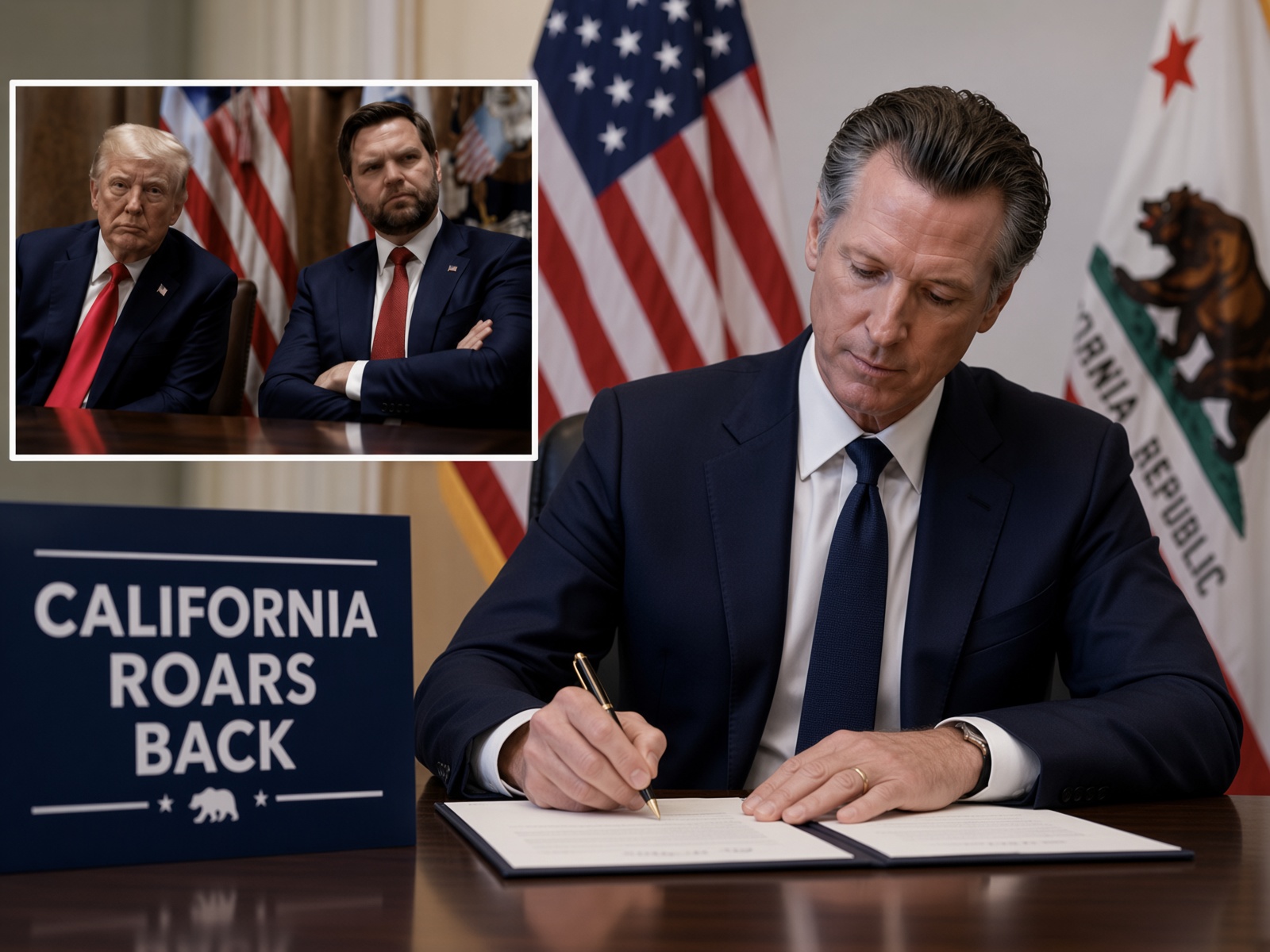
Gavin Newsom, who is one of the more like Democrats to run for his party’s 2028 presidential nomination, signaled that he’d rather keep the fraud pipeline intact by signing legislation bearing the name of the investigative journalist who uncovered much of it.
Newsom signed controversial legislation Saturday that Republicans have dubbed the “Stop Nick Shirley Act,” expanding the state’s existing Safe at Home privacy program to cover certain immigration-support workers, employees and volunteers who face threats or harassment because of their work.
The measure, Assembly Bill 2624, is officially titled “Privacy for immigration support services providers” and is scheduled to take effect Oct. 1, 2027.
The law allows qualifying immigration-service workers to use substitute addresses to keep their home addresses out of certain public records.
It also restricts publishing personal information or images when done with the specific intent that another person imminently use that information to commit violence or threaten violence – nothing that Shirley has done, by the way.
The legislation has become a flashpoint in a broader debate over privacy protections and press freedom.
Republican critics dubbed the measure after Shirley, whose viral investigations have focused on uncovering alleged billions in fraud involving government-funded programs.
Opponents argue the law could potentially discourage journalists and citizen investigators from scrutinizing organizations receiving taxpayer money, particularly when reporting involves identifying individuals connected to those organizations who just happen to be in “immigration support services.”
Supporters reject that characterization, arguing that the measure is narrowly aimed at doxxing, harassment and threats rather than legitimate investigative journalism.
The law’s operative restrictions require specific harmful intent rather than simply publishing information about an immigration-service provider.
That distinction is likely to remain at the center of the controversy as critics test whether California’s effort to protect immigration-service workers can coexist with journalists’ First Amendment rights to investigate and report on organizations operating with public money.
When Democrat Assemblymember Mia Bonta, wife of California Attorney General Rob Bonta – the man whose office is charged with investigating alleged fraud – introduced the legislation in February, she repeatedly referenced viral reports about alleged fraud and the backlash surrounding them, although she did not identify any journalist by name.
“Right now, our immigrant service providers are living in fear because of extremists looking to demonize the work that they do and the populations they serve,” Bonta said. “That is an intolerable consequence of the anti-immigrant rhetoric that exists right now.”
Republican Assemblyman Carl DeMaio became one of the measure’s most vocal opponents, arguing during committee hearings and floor debates that the legislation will chill independent investigations of nonprofit organizations and other entities receiving taxpayer money.
DeMaio dubbed the legislation the “Stop Nick Shirley Act.”
Shirley has similarly argued that the measure could make it more difficult for independent journalists to investigate organizations receiving public funds.
Shirley’s initial December 2025 investigation focused heavily on Minneapolis child care centers receiving taxpayer money through Minnesota’s Child Care Assistance Program, or CCAP.
In the viral video, Shirley visited multiple facilities and questioned whether the level of activity he observed matched their licensing capacity and the substantial amounts of public funding they received.
One of the most prominent locations was Quality Learning Center, whose exterior sign famously misspelled “Learning” as “Learing.” Shirley highlighted locked doors, a largely empty parking lot and what he said was an apparent lack of children during his visit.
State records later showed that Quality Learning Center received approximately $1.9 million through CCAP during fiscal 2025.
The facility disputed Shirley’s allegations, saying he arrived outside its regular operating hours.
Subsequent state inspections found children present at most of the facilities featured in his video, and officials said they had not established fraud at those locations based solely on Shirley’s reporting.