OREM, Utah — Prominent conservative activist and Turning Point USA founder Charlie Kirk was fatally shot during an outdoor campus appearance at Utah Valley University on September 10, 2025, an assassination that convulsed the American political landscape and triggered an exhaustive multi-agency federal manhunt.
Kirk, 31, was addressing a crowd of students and supporters shortly past noon when gunfire erupted from an elevated vantage point overlooking the gathering. He was rushed in critical condition to a regional trauma center, where medical staff pronounced him dead.
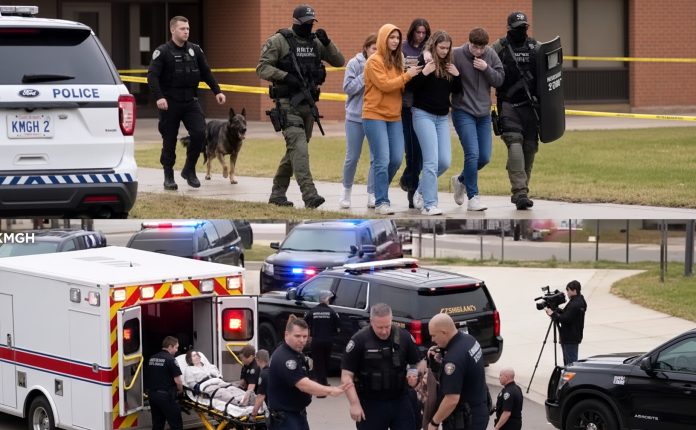
Federal, state, and local law enforcement moved rapidly to secure the area, transforming the suburban university grounds into an expansive, cordoned crime scene as hundreds of panicked attendees fled for shelter across adjacent campus quadrangles.
Rooftop Sniper Post and Forensic Canvas
Within hours of the shooting, the Federal Bureau of Investigation confirmed that the assailant had staged the attack from the rooftop of a nearby multi-story campus building with an unobstructed sightline to the speaker’s platform.
Crime-scene technicians meticulously processed the elevated perch, recovering critical latent forensic traces left behind in the shooter’s wake. Federal affidavits noted that investigators lifted distinct footwear impressions, a clean palm print, and clear forearm impressions from the rooftop parapet where the rifle had been braced.
A tactical search of the surrounding perimeter quickly yielded significant physical evidence. In a dense, wooded corridor adjacent to the campus through which the gunman was believed to have escaped, search teams recovered a high-powered bolt-action rifle fitted with an optic. Ballistics specialists were immediately dispatched to cross-reference the weapon with shell casings and projectile fragments recovered from the scene.
To accelerate the search, the FBI offered a $100,000 reward for actionable intelligence and established a dedicated national intake portal soliciting smartphone video, digital photographs, and dashcam recordings from anyone near the campus perimeter during the midday window.
Manhunt Concludes with Arrest
The intensive manhunt culminated roughly 33 hours after the initial shots were fired, when tactical teams apprehended a primary suspect without further loss of life.
Addressing reporters in a high-profile briefing, FBI Director Kash Patel confirmed the arrest, revealing that investigative units had synthesized thousands of digital public tips, cellular tower data, and regional surveillance footage to track the individual down.
While the arrest brought a swift end to the acute perimeter search, Patel underscored that the operation had transitioned into an expansive prosecutorial inquiry. Investigators continue to interrogate the suspect’s digital footprint, travel history, personal writings, and financial records to establish premeditation and assess whether the shooter operated with any operational assistance.
A Fixture of Conservative Campus Mobilization
Kirk rose to national prominence over the past decade as the founder and executive director of Turning Point USA, an advocacy organization that built a sprawling infrastructure across high school and university campuses nationwide.
A skilled debater and fixture in conservative media circles, Kirk specialized in open-microphone campus tours, frequently drawing capacity crowds to engage in pointed ideological debates over free speech, social policy, academic bias, and federal governance. His high-energy campus events—frequently livestreamed to millions of digital followers—made him both an influential ally to conservative party leaders and a lightning rod for ideological counter-protesters.
His death ignited a fierce national conversation regarding the escalating perils confronting public figures, political commentators, and open-air university discourse in an era characterized by intense polarization.
Repercussions Across the Political Landscape
Kirk’s killing drew immediate and widespread condemnation from figures across the American political spectrum. Lawmakers, civil liberties advocates, and institutional leaders universally denounced the targeted killing as an intolerable assault on democratic civic engagement, renewing urgent bipartisan warnings about the normalization of ideological violence.
At Utah Valley University, classes were suspended as the institution grappled with the trauma of a high-profile homicide unfolding in real time on its grounds. Administrators arranged emergency grief counseling and announced an exhaustive review of campus access and event security policies.
As federal prosecutors prepare formal indictments, the assassination has left a lasting imprint on the nation’s political apparatus, compelling organizers to rethink the security architecture surrounding political gatherings and confronting the country once again with the lethal consequences of radicalized domestic violence.